HRMS implementation for UAE companies: Go live without
putting a single payroll at risk.
A phased programme: scoping and configuration, data migration from spreadsheets or a legacy system, a parallel payroll run before cutover, device and bank setup, administrator training and go-live support.
Scoping, migration, parallel run, go-live
- Scoping Workshop
- Policy Configuration
- Data Migration
- Parallel Payroll Run
- Biometric Device Setup
- Bank File Setup
- Administrator Training
- Go-Live Support
Implementation
How does an implementation run?
3 parts. Swipe across.Keep scrolling.
Configuration starts from your policies, not a template
The first sessions are about how your company already works: who approves what, which shifts exist, how salary is built up. Nothing is loaded until that structure is agreed in writing.
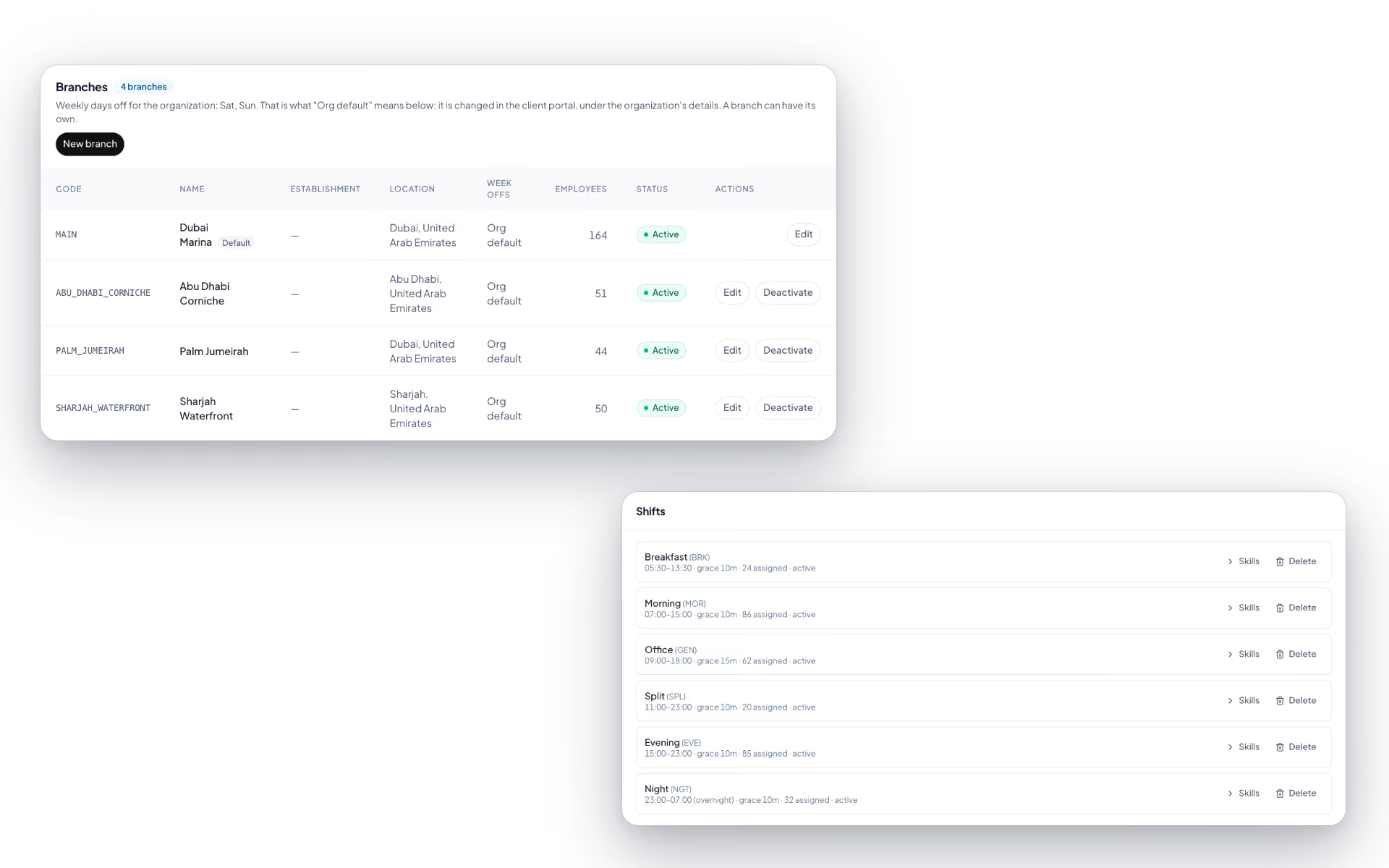
- Entity, branch and department structure mapped first
- Shift patterns, leave types and accrual rules configured
- Salary structure and earning and deduction components defined
- Roles, approval chains and branch scoping set before any user logs in
Your data moves once, and it is checked before it lands
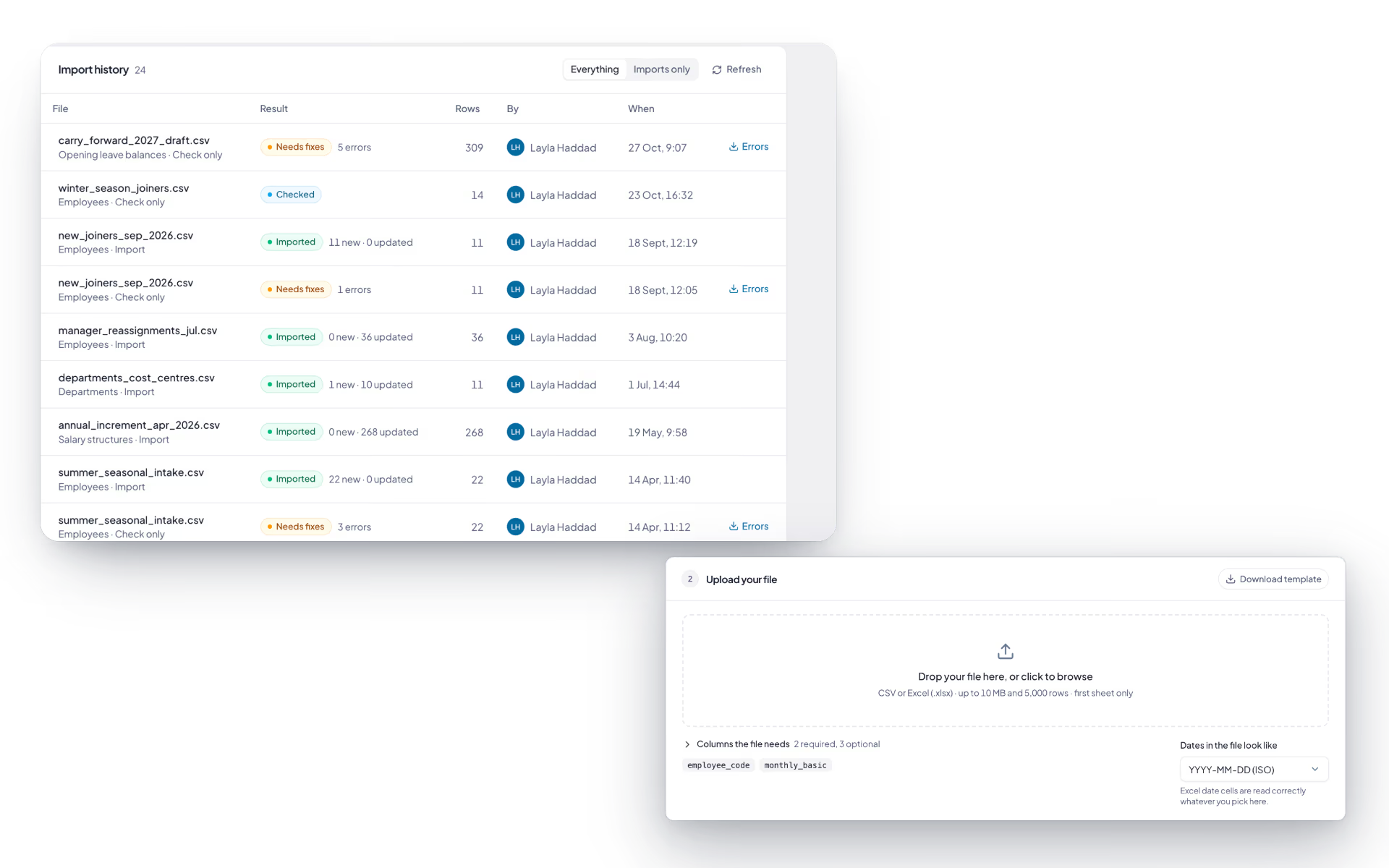
Migration is the part that decides whether the first payroll works. You supply the source data and we load, map and reconcile it against totals you recognise.
- Employee master imported in bulk from your file
- Salary structures and components mapped line by line
- Opening leave balances loaded so nobody starts at zero
- Historical attendance imported by CSV and documents attached to records

The first payroll is proved before anyone is paid from it
A payroll month is run in DenwaysHR alongside your existing process and the two are compared. Variances are explained before sign-off, not discovered on disbursement day.
- One full parallel run against your own figures
- Every variance investigated and explained before cutover
- WPS file format validated with your bank ahead of submission
- Biometric terminals connected and punches reconciled before go-live

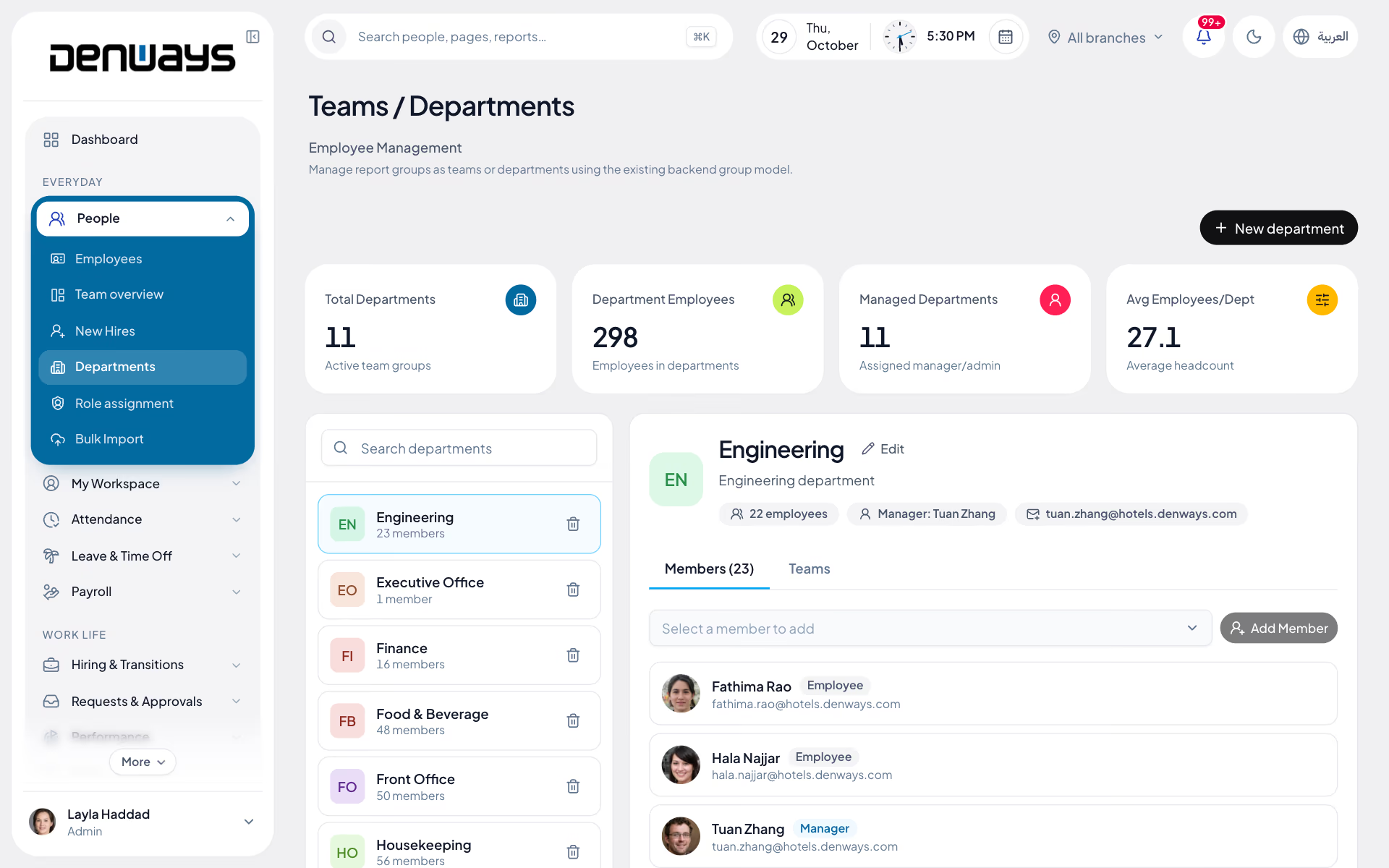
Implementation, screen by screen.
The product itself, on a demo company's data. Nothing here is drawn for the website.
Three phases. One live payroll.
Implementation is mostly data work. The phases exist so the data is right before anybody's salary depends on it.
Scope and configure
- Entity, branch and department structure
- Shift, leave, overtime and salary policies
- Roles, approval chains and access scoping
- The agreed configuration written down
Migrate and validate
- Employee master, salary structure and balances loaded
- Biometric devices and bank file formats set up
- Attendance history imported and reconciled
- One parallel payroll run against your figures
Train and go live
- Administrator and manager training sessions
- Employee rollout and self-service invitations
- Support through the first live payroll cycle
- Handover to the standard support channels
How long does implementation typically take?
Implementation time depends far more on your data than on our software. A single-entity company with clean records and one salary structure typically moves faster than a group with several entities, multiple biometric sites and years of leave history to reconcile. We size the phases against your scope at the start and tell you what is realistic rather than quoting a date we cannot control.
What exactly do we have to supply?
Clean employee master data, your salary structure with every earning and deduction component, bank details for disbursement, historical leave balances as at the cutover date, and a named person on your side who can decide policy questions. Anything unclear in that data is the single biggest cause of delay, so we review it early rather than at load time.
Who does the work?
We do the configuration, the loading, the mapping and the reconciliation. Your team supplies the source data, answers policy questions and signs off the parallel run. HR administrators are trained before go-live so the system is not dependent on us once you are live.
What happens if the first payroll does not match?
The parallel run exists for exactly this. It happens in a month where your existing process is still the one that pays people, so a variance is a question to answer rather than an incident. We work through each difference with you and only cut over once the two sets of figures agree.
Do we have to stop using our current process during the project?
No. You keep running it until the parallel month is signed off, which is why cutover is planned at the start of a payroll month rather than in the middle of one. Employees are invited to self-service at rollout, after the data behind their profile is already correct.
Keep reading
Bring your whole workforce onto one platform.
See how DenwaysHR handles HR, attendance and leave across the GCC, and payroll with the WPS file in the UAE.