Move HR and payroll off spreadsheets: Payroll stops being
a file only one person understands.
Employee master, salary structure, leave balances, attendance history and documents brought across, with a parallel run so the first live payroll is verified before anybody is paid from it.
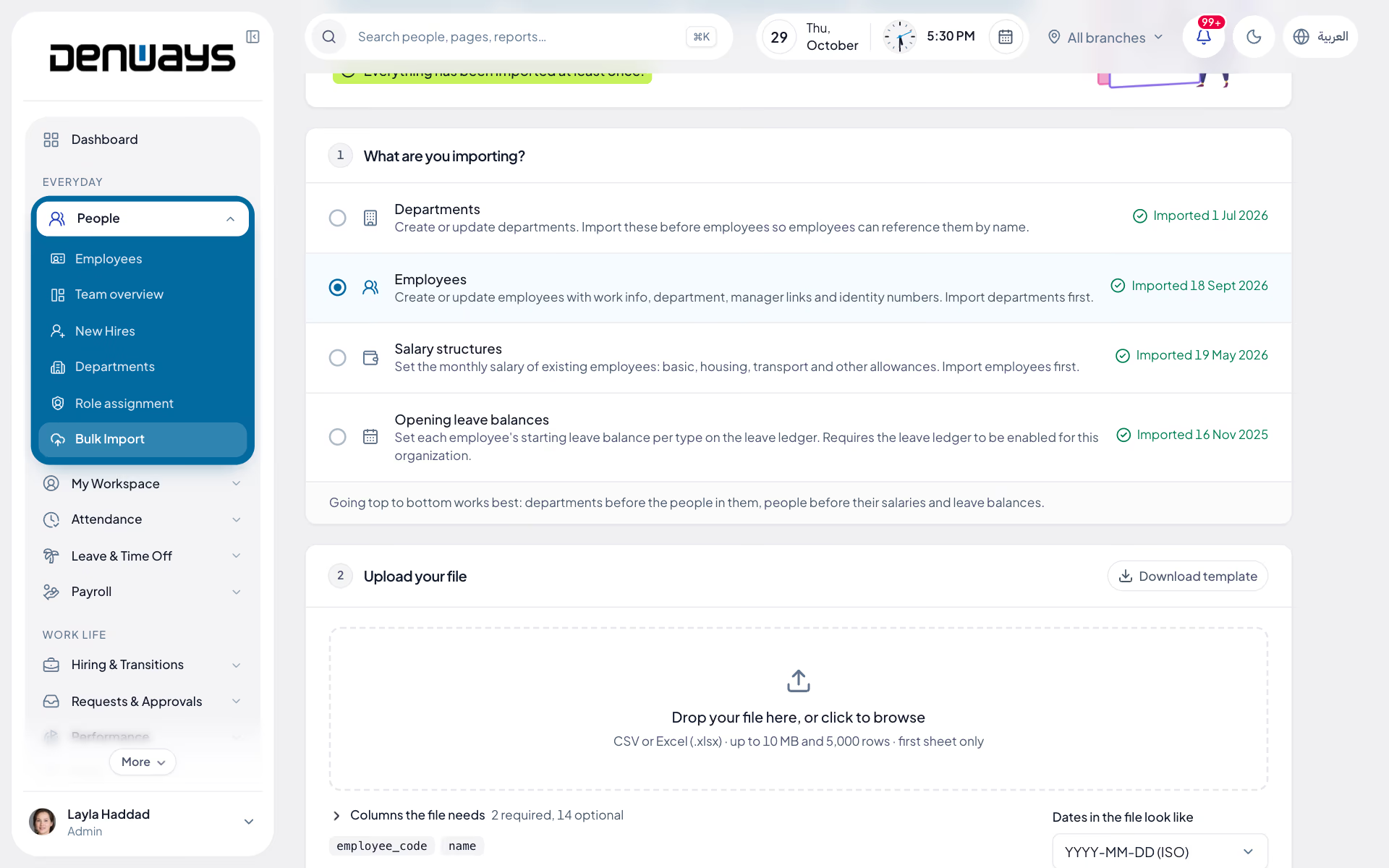
Off spreadsheets, onto one employee record
- Employee Master Import
- Salary Structure Mapping
- Opening Leave Balances
- Attendance History
- Document Upload
- Parallel Payroll Run
- Cutover Planning
- Legacy Record Retention
Migration
How does a migration run?
3 parts. Swipe across.Keep scrolling.
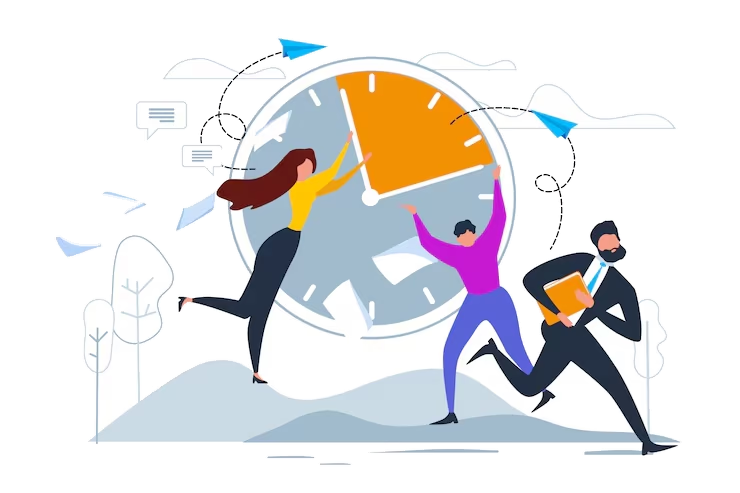
What a spreadsheet cannot give you, however good it is
A payroll workbook can be accurate and still be a risk, because nothing in it records who changed what. The problems are structural rather than a reflection of the person maintaining it.
- No audit trail behind a salary change, so no answer a year later
- Formula drift as rows are inserted, copied and hidden
- One person holding the file, and no wage protection file coming out of it
- Leave balances in a second sheet that quietly disagrees with the first
What comes across, and what it becomes
Migration is not a copy of your file into ours. Each part of it becomes a structured record that attendance, leave, payroll and reporting all read from.
- Employee master imported in bulk, with government IDs encrypted at rest
- Salary structure mapped into earning and deduction components
- Opening leave balances loaded as at the cutover date
- Historical attendance imported by CSV and documents attached to each record

The first live run is checked against the last old one
One payroll month is processed in DenwaysHR while your existing process still pays people. The two are compared line by line, so cutover happens on evidence rather than confidence.
- A full parallel month against figures you already recognise
- Variances traced to a component, not written off as rounding
- WPS file format confirmed with your bank before the first submission
- Cutover timed to the start of a payroll month, never the middle

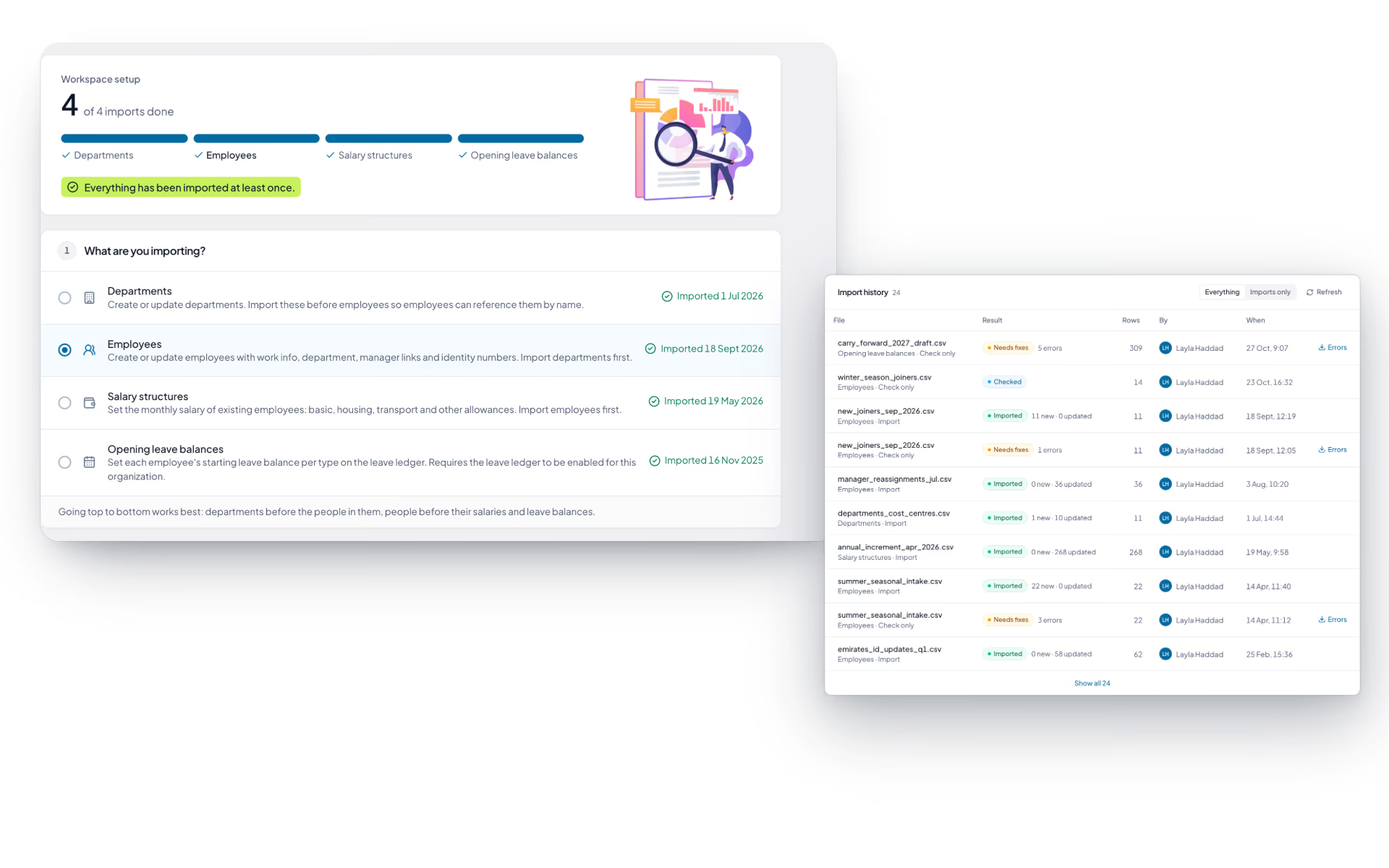
Migration, screen by screen.
The product itself, on a demo company's data. Nothing here is drawn for the website.
Three phases. No lost month.
Nobody can afford a payroll month that does not happen. The sequence exists so there is never a point where only the new system can pay people.
Extract and clean
- Employee master exported from the current file or system
- Duplicates, blank rows and leavers removed
- Salary components agreed and named consistently
- Leave balances confirmed as at the cutover date
Load and reconcile
- Master, salary structure and balances imported
- Attendance history loaded and documents attached
- Totals reconciled against your own figures
- Bank details and WPS file format set up
Parallel and cut over
- One month run alongside the existing process
- Every variance explained before sign-off
- Cutover at the start of a payroll month
- Old records retained read-only for your own reference
How far back should we bring historical data?
Far enough that the system can answer the questions you get asked. Leave balances must be correct as at cutover, and enough attendance history to support the current year usually covers it. Older records can be imported by CSV if you want them searchable, but they are rarely worth cleaning to the same standard.
What happens to our old spreadsheets and records?
Your old files and records stay yours. We do not touch or delete anything in your existing files or system, and most companies keep them read-only as an archive for the period their auditors require. Once cutover is signed off nothing depends on them, which is the point.
What if the migrated numbers do not match ours?
Then we find out during the parallel month, while your existing process is still the one paying salaries. Each difference is traced to a specific component rather than accepted as rounding, and cutover does not happen until the two sets of figures agree and you have signed off.
Will employees be disrupted while this happens?
Employees are not disrupted during extraction, loading or the parallel run, all of which happen behind the scenes. Employees are invited to self-service at rollout, when their profile, balances and payslip history are already correct, so their first experience of the system is a working one.
How much of the work falls on our HR team?
The extract and the policy decisions are yours; the loading, mapping and reconciliation are ours. Realistically the biggest demand on your team is answering questions about how the current file works, because that knowledge usually lives with one person and needs writing down anyway.
Keep reading
Guides
Bring your whole workforce onto one platform.
See how DenwaysHR handles HR, attendance and leave across the GCC, and payroll with the WPS file in the UAE.