ILOE insurance: ILOE, explained for
the people who get asked.
The UAE's Involuntary Loss of Employment scheme for HR: who must enrol, the two categories and premiums, what it pays, the fine, and what to track.
The short answer
ILOE, Involuntary Loss of Employment insurance, is compulsory for UAE private-sector and federal government employees under Federal Decree-Law No. 13 of 2022. The employee subscribes: AED 5 a month on a basic salary of AED 16,000 or less, AED 10 above it. It pays 60% of the insured salary, up to a monthly limit, for up to three months a claim, and not subscribing is fined AED 400.
ILOE is the employee's insurance, not the employer's. HR ends up dealing with it anyway, because the fine lands on the employee and the question lands on HR.
What is ILOE?
ILOE stands for Involuntary Loss of Employment. It is a compulsory insurance scheme, introduced by Federal Decree-Law No. 13 of 2022, that pays an employee a share of their salary for a limited time if they lose their job through no fault of their own.
Who has to enrol in ILOE?
Employees in the private sector and the federal government, UAE nationals and residents alike. Subscribing is the employee's own obligation. The employer is not required to pay the premium, though some choose to. For what the employer does have to provide, see UAE employee insurance.
- Not covered: investors and business owners who own and manage their own company
- Not covered: domestic workers
- Not covered: employees on temporary contracts
- Not covered: juveniles under 18
- Not covered: retirees who receive a pension and have taken up new work
What are the two ILOE categories?
| Category A | Category B | |
|---|---|---|
| Basic salary | AED 16,000 or less | Above AED 16,000 |
| Premium | AED 5 a month | AED 10 a month |
| Monthly compensation limit | AED 10,000 | AED 20,000 |
What does ILOE pay out?
Sixty per cent of the basic salary over the six months before the job was lost, up to the monthly limit for the category, for a maximum of three months for each claim.
Sixty per cent of basic salary is how MOHRE described the benefit when the scheme opened; the UAE Government portal now says 60 per cent of the subscription salary, so check the base on a specific claim with the insurer.
Who can claim, and what stops a claim?
HR is usually asked this on the day someone leaves. The UAE Government portal sets these conditions:
- At least twelve consecutive months of subscription, with every premium paid on the schedule chosen
- The job ended for a reason other than resignation
- No dismissal for disciplinary reasons
- No open work absence complaint against the employee
- The job loss did not come from a strike or non-peaceful protest
- The claim is not based on fraud, and the employer is not fictitious
- The employee is in the country
Payment is suspended if the person finds a new job during the three months. MOHRE also said at launch that the right to claim is lost on leaving the country.
How does an employee subscribe and claim?
The UAE Government portal lists nine channels for subscribing and paying, including the ILOE website and app, business service centres, exchange houses and some banks' apps. MOHRE said at launch that premiums could be paid monthly, quarterly, every six months or yearly, so check which options the scheme offers today. A worker on commission whose contract defines no basic salary can choose either category.
A claim goes to the insurer within 30 days of the end of the employment, or of the end of a labour dispute over it, and the portal says payment follows within two weeks of the claim. For someone leaving the company, that 30-day limit is worth mentioning at exit.
What is the fine for not subscribing?
An employee who has not subscribed faces a fine of AED 400, and one who subscribed but does not pay the premiums is fined AED 400 too. Both fines are charged to the employee, but an unpaid fine can stand in the way of a new work permit, which is how it becomes the employer's problem at the next renewal.
What should HR track for ILOE?
- Each employee's status: enrolled, not enrolled or exempt
- The expiry date of each policy, since a lapsed policy breaks the twelve months of continuous cover
- The right category when a basic salary crosses AED 16,000
- New joiners, who are easy to miss in their first months
Why the basic salary matters again
Both the category and the payout are calculated on basic salary, not the total package. It is the same figure that decides gratuity and overtime, which is one more reason to set the split between basic and allowances deliberately.
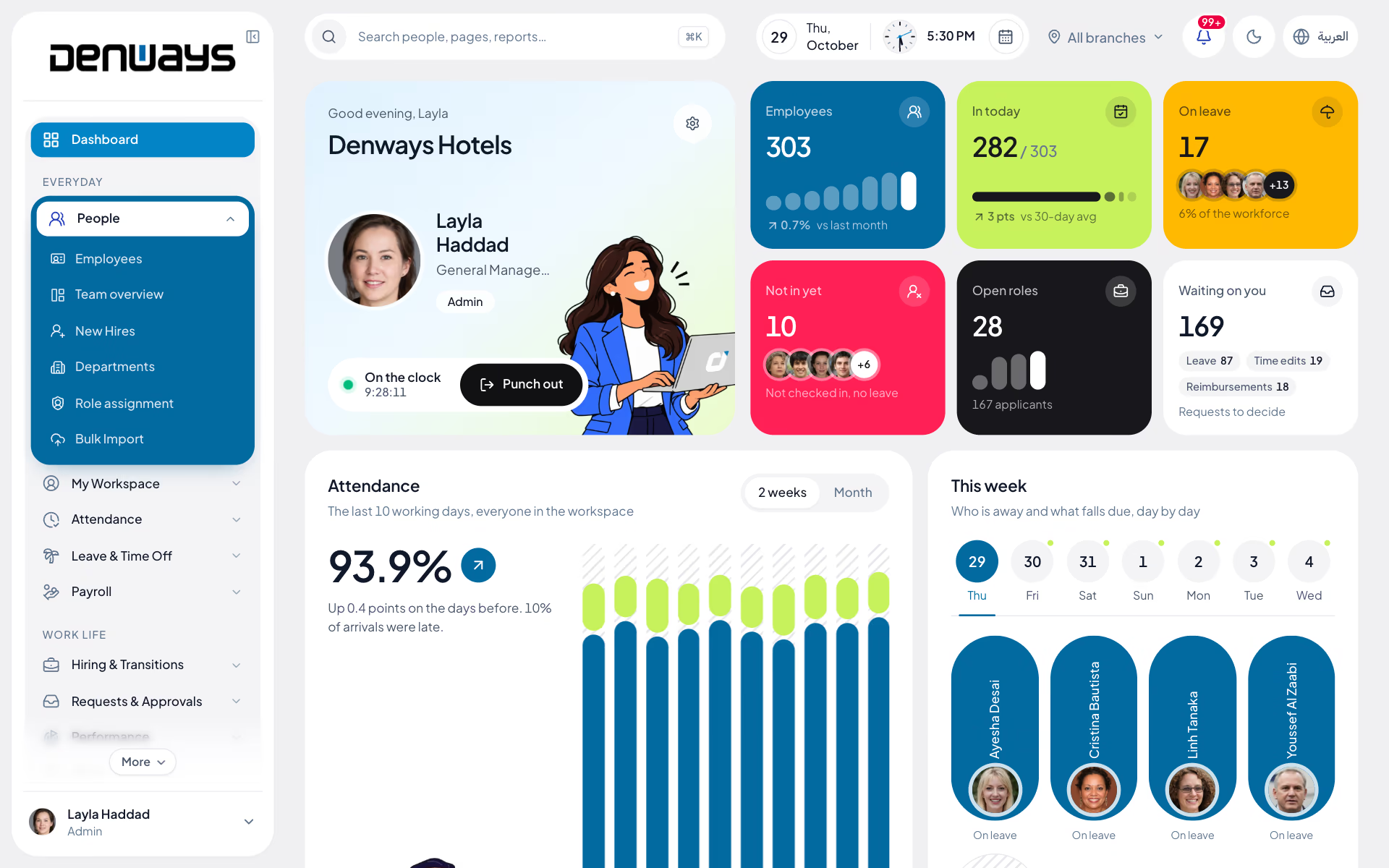
DenwaysHR records each employee's ILOE status and policy expiry, works out the category from basic salary, and alerts HR when someone is not enrolled or a policy is about to lapse. It tracks and reminds; it does not subscribe employees or deduct the premium.
See ILOE trackingSources
- UAE Government portal: Insurance against job loss (Federal Decree-Law No. 13 of 2022)
- Emirates News Agency (WAM): MOHRE's announcement of the scheme, December 2022
Official pages, as they stood on the date above. The law is the authority; check it, or ask your adviser, before acting on a figure.
Keep reading
Bring your whole workforce onto one platform.
See how DenwaysHR handles HR, attendance and leave across the GCC, and payroll with the WPS file in the UAE.